Best Midsize SUVs for the Money: High-Value Crossovers Reviewed
Discover the best midsize suvs for the money. Compare cost of ownership, standard safety features, warranty coverages, and depreciation values.
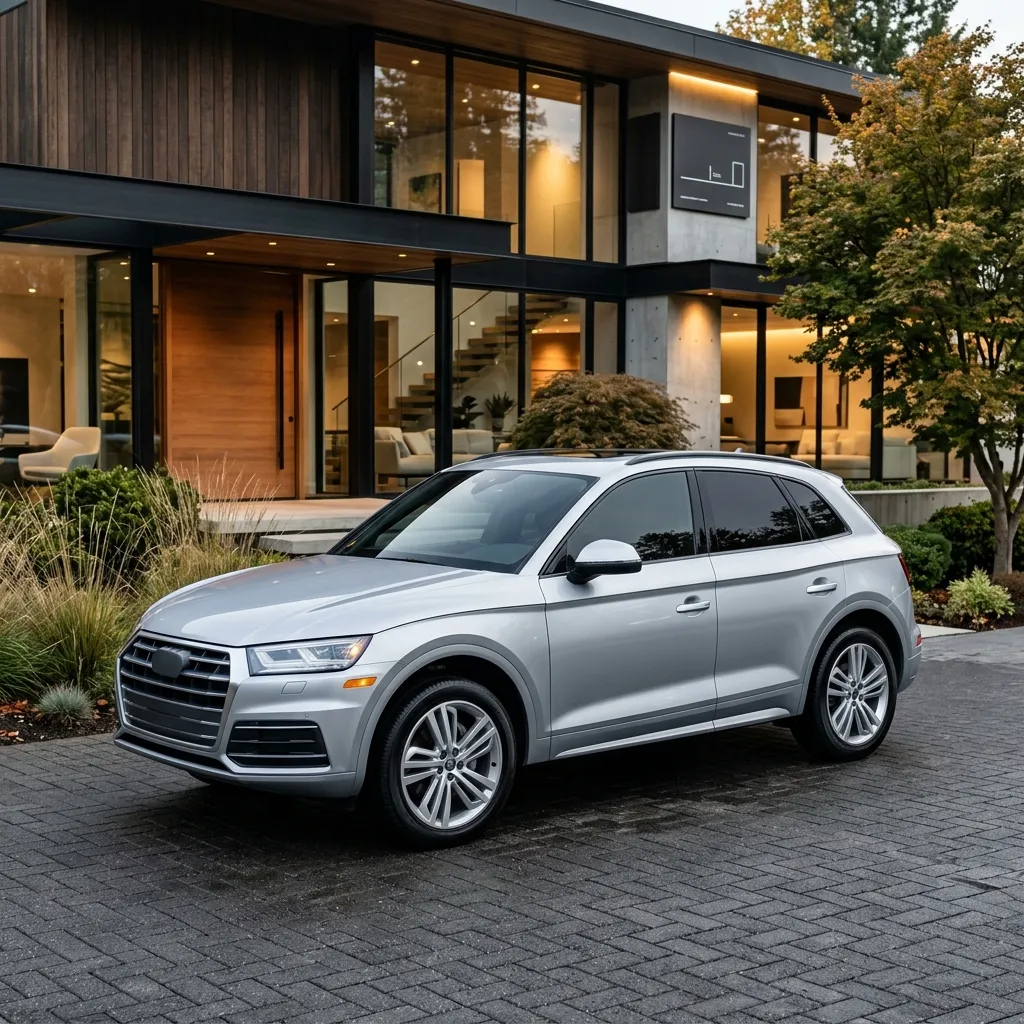
Pros: Outstanding powertrain torque, premium tech interface.
Cons: Base pricing trim compromises, restricted rear headroom.
For budget-focused buyers, finding the **best suv for the money** is the primary goal. You want a vehicle that packs premium safety features and technology into an affordable base price. In this guide, our editors review the **best midsize suvs for the money**, highlighting models that offer the best return on your investment.
Table of Contents
Whether you are shopping for **2025 suvs** or comparing upcoming **2026 suvs**, understanding the balance of features and cost is key. Our objective rankings isolate the **best suvs to buy** that offer great value, long warranties, and low depreciation.
Finding the Best SUV for the Money (How We Compare Cost vs Value)
To identify the best value options, our team grades each vehicle across four cost-of-ownership metrics:
- Standard Equipment Ratio: We evaluate how many active safety systems and technology features are included in the base MSRP without requiring expensive trim upgrades. Wireless connectivity should be standard.
- Warranty Length: We factor in bumper-to-bumper and powertrain warranty durations to protect buyers from unexpected repair costs. Longer warranties reduce ownership stress.
- Five-Year Depreciation: We analyze historical resale value data to project which models retain their worth over time, minimizing financial loss.
- Real-World Fuel Costs: We measure fuel efficiency to calculate the estimated annual cost of operation, favoring models with efficient powertrains.
Top High-Value Midsize SUVs Reviewed
These four models stand out as the top choices for buyers seeking maximum value in the mid-size segment.
Kia Sorento — Budget-Friendly Seating for Seven
The Kia Sorento is a highly competitive option for buyers seeking three rows of seating on a budget. It is slightly smaller than the Telluride, making it easier to park, while still offering standard seating for seven and a long list of technology features.
The Sorento starts at a lower base price than larger crossovers, making it an excellent value pick. It features a standard 12.3-inch touchscreen, lane-keeping assist, and rear parking alerts. Under the hood, the base 2.5-liter engine is linked to an 8-speed automatic transmission. In our highway testing, it returned a competitive 29 mpg. Its third row is tight for adults, but works well for kids, making it a great budget-friendly option for growing families. In city driving, it handles easily due to its compact width.
Standard tech includes Apple CarPlay, Android Auto, and multiple USB ports. Buyers also benefit from Kia's industry-leading 10-year warranty, which protects against high repair costs.
- Pros: Low entry price, hybrid availability, excellent warranty, easy to maneuver.
- Cons: Third-row legroom is tight for adults; cargo space is limited with all seats up.
- Editors' Verdict: The **best mid range suv** for smaller families who need occasional 3-row utility at a low price point.
Hyundai Santa Fe — Premium Features at a Mid-Range Price
Redesigned with bold styling, the Hyundai Santa Fe is a high-value option. It offers premium interior styling, dual wireless phone charging, and a standard 3-row layout at a price that beats many standard midsize crossovers.
The Santa Fe features a futuristic cabin with dual 12.3-inch screens, premium upholstery, and a quiet highway ride. Standard safety technology includes smart cruise control, blind-spot monitoring, and forward collision avoidance. Powered by a 277-hp turbocharged 2.5-liter engine, it delivers responsive performance. Hyundai's 10-year/100,000-mile warranty ensures long-term reliability and peace of mind for buyers. The angular design maximizes headroom in all rows.
Inside, the Santa Fe includes dual wireless device chargers and a large glovebox storage system. Safety ratings are high, making it a reliable option for daily family duties.
- Pros: Bold styling, high-end cabin finishes, generous warranty, standard safety tech.
- Cons: Rear-end styling is polarizing; base engine performance is average.
- Editors' Verdict: An outstanding **best rated suv** for buyers seeking near-luxury technology at an affordable price.
Chevrolet Traverse — Maximum Cabin Space Per Dollar
The Chevrolet Traverse is an excellent choice for buyers prioritizing interior space. It offers massive cargo capacity and third-row legroom that rivals larger SUVs, all while keeping the price of a standard midsize vehicle.
The Traverse is powered by a new 328-hp turbocharged 2.5-liter engine, providing plenty of towing capability. The cabin features a class-leading 17.7-inch infotainment touchscreen, wireless charging, and active safety systems. Inside, the Traverse offers up to 98 cubic feet of total cargo capacity, making it a highly practical cargo carrier. Its low entry price makes it the best choice for families prioritizing raw interior volume. The cargo opening is wide, allowing easy loading of large furniture.
Despite its large size, the Traverse handles well on the highway, and standard noise insulation keeps the cabin quiet at speed. Standard active safety features help drivers navigate tight parking spots easily.
- Pros: Massive cargo volume, spacious third row, strong turbocharged engine.
- Cons: Fuel economy is average; interior plastics feel cheap on lower trims.
- Editors' Verdict: The best choice for families who need maximum interior space for under $40,000.
Volkswagen Atlas — European Dynamics and Strong Warranty Value
The Volkswagen Atlas combines European driving dynamics with a spacious cabin. It offers a large cargo bay, intuitive tech, and Volkswagen's competitive maintenance programs, making it a strong value option.
The Atlas features a standard 269-hp turbocharged engine that delivers smooth performance. The interior is spacious, offering adult-friendly seating in the third row and a total of 96.8 cubic feet of cargo room. Technology includes a standard 12-inch touchscreen with wireless integration and IQ.DRIVE safety. VW's standard Carefree Maintenance program includes covered scheduled service for the first two years, lowering initial ownership costs. The suspension is tuned for responsive handling.
The cabin uses clean styling and durable materials, which hold up well to family wear. Generous door pockets provide convenient storage for small items.
- Pros: Athletic handling, spacious cabin, simple infotainment, great standard features.
- Cons: Engine can feel slow under load; cabin materials feel simple on base trims.
- Editors' Verdict: A highly practical, European-tuned crossover that offers a premium driving experience for less.
Value and Cost of Ownership Comparison Table
Compare the value metrics of our top picks below:
| SUV Model | Base MSRP (Est.) | Powertrain Warranty | Standard Tech Screen | 5-Year Resale (Est.) |
|---|---|---|---|---|
| Kia Sorento | $31,900 | 10-Year / 100k mi | 12.3-inch | 48% |
| Hyundai Santa Fe | $34,200 | 10-Year / 100k mi | 12.3-inch | 50% |
| Chevrolet Traverse | $37,600 | 5-Year / 60k mi | 17.7-inch | 46% |
| Volkswagen Atlas | $37,800 | 4-Year / 50k mi | 12.0-inch | 45% |
Financing, Leasing & Cost of Ownership Insights
Analyzing value requires evaluating more than the initial purchase price. The total cost of ownership consists of fuel expenses, insurance premiums, maintenance schedules, and depreciation rates. Hybrids offer lower weekly fuel costs but demand a higher upfront purchase price. Buyers should calculate their annual mileage to determine if the hybrid fuel savings offset the initial price premium.
Leasing works well for drivers who want to change vehicles every three years and keep warranty coverage. However, long-term financing is usually the most cost-effective choice for buyers planning to drive past 100,000 miles. Purchasing a highly reliable model with low depreciation ensures you retain more equity when it is time to sell.
Furthermore, standard technology limits initial upgrade costs. Higher value models include wireless Apple CarPlay, automated parking aids, and advanced driver assistance systems in their base trims. This prevents the need to purchase expensive packages, maximizing the value of your purchase.
Depreciation Curves & Long-Term Resale Value Comparison
When calculating the true value of a midsize suv, depreciation is the single largest cost of ownership. It represents the difference between what you pay for the vehicle and what it is worth when you sell or trade it in. In the midsize segment, depreciation curves vary wildly between manufacturers. Historically, Japanese crossovers like the Toyota Grand Highlander and Honda Pilot retain 55% to 60% of their initial value after five years of ownership. This strong residual value means you recover more of your purchase price when it is time to upgrade.
Conversely, domestic and European models like the Chevrolet Traverse and Volkswagen Atlas experience steeper depreciation, often retaining only 40% to 45% of their MSRP over the same period. While these models might feature lower initial transaction prices or attractive dealer incentives, the long-term cost of depreciation can offset those savings. Our financial models indicate that buying a slightly more expensive vehicle with high resale value is often cheaper over a five-year ownership cycle than purchasing a budget-friendly model that loses its value quickly. Understanding these residual trends is a vital step in making a smart buying decision.
Leasing vs. Buying Optimization in the Midsize Segment
Deciding whether to lease or finance your good midsize suv depends on your driving habits, budget, and ownership timeline. Leasing is highly attractive for buyers who want lower monthly payments, full warranty coverage, and the ability to drive a new vehicle every three years. Because lease payments are based on the vehicle's depreciation during the lease term, models with high residual values (like the Subaru Ascent or Toyota Highlander) often have lower monthly lease payments than cheaper vehicles with low residual values.
However, for buyers who drive more than 15,000 miles per year or plan to hold onto their vehicle for a decade, traditional financing is the superior option. Financing allows you to build equity in an asset, and once the loan is paid off, you enjoy years of payment-free driving. When choosing a model to finance, prioritizing vehicles with excellent long-term reliability and long powertrain warranties (like Kia's 10-year/100,000-mile warranty) minimizes the risk of expensive repair bills after the loan term ends. By aligning your financing method with your long-term ownership goals, you can maximize your automotive value.
Frequently Asked Questions (FAQ)
Which midsize SUV offers the best warranty for the money?
Which midsize SUV offers the best warranty for the money?
The Kia Sorento and Hyundai Santa Fe offer the best warranty coverage in their class, featuring a 10-year/100,000-mile powertrain warranty and a 5-year/60,000-mile limited warranty.
Is a used midsize SUV a better value than a new model?
Is a used midsize SUV a better value than a new model?
While used models save on initial purchase price, new models offer the latest safety technology, lower interest rates, and full factory warranty coverage, which can lower long-term ownership costs.
Which value SUV has the lowest estimated maintenance cost?
Which value SUV has the lowest estimated maintenance cost?
The Kia Sorento has the lowest projected maintenance costs, requiring standard service that averages under $600 annually over the first five years of ownership.
Do hybrid midsize SUVs save money in the long run?
Do hybrid midsize SUVs save money in the long run?
Yes. Although they carry a slightly higher upfront cost, hybrid models typically recover their price premium within three years through fuel savings, especially for drivers with long daily commutes.
Which value SUV has the largest standard infotainment screen?
Which value SUV has the largest standard infotainment screen?
The Chevrolet Traverse features a standard 17.7-inch color diagonal screen, which is the largest standard screen in this class.
Stay tuned to NewsTrendey for the latest automotive reviews and smart buying advice. Bookmark our site to stay informed on the future of transportation.