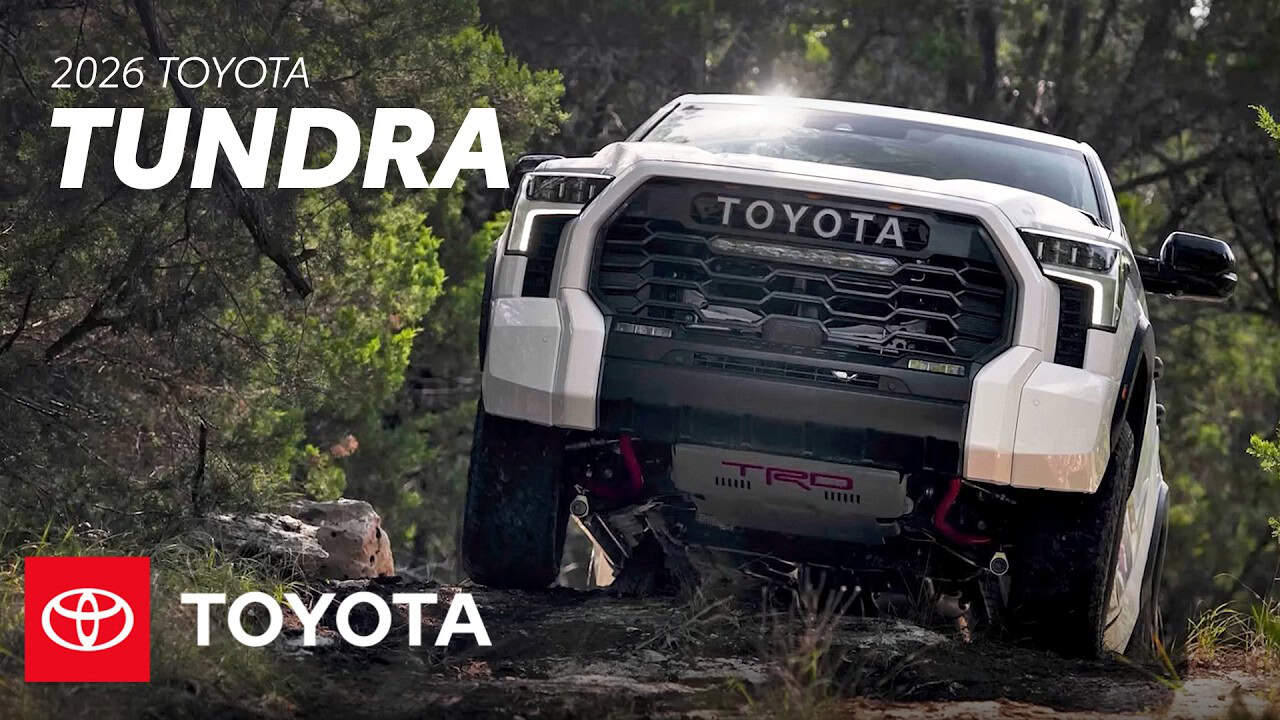
The 2026 Tundra, and especially the tundra trd pro variant, arrives at a moment when capability and connectivity are equally demanded. This truck is not a mere refresh. It is Toyota’s strategic answer to buyers who want true off-road performance, hybrid torque, and day-to-day refinement without compromise. The tundra trd pro is built to perform in the wilderness and to hold its own on long road hauls, towing missions, and weekend expeditions. That combination is significant for buyers and the industry alike.
Why this matters now
Pickup buyers have shifted expectations. Raw strength alone no longer wins showroom battles. Consumers want torque that feels immediate, suspension that soaks up real off-road terrain, and in-cabin tech that keeps drivers connected without friction. The tundra trd pro packages those requirements into a credible platform, combining hybrid-assisted powertrains for usable low-end torque, race-derived suspension for durability and control, and a feature set that reads like a modern adventure toolkit.
Market context matters, too. Major outlets such as Reuters and Associated Press have documented how pickup demand and premium truck trims continue to command a growing share of U.S. vehicle sales, pushing manufacturers to invest aggressively in high-margin performance models. For readers tracking how legacy nameplates and experimental concepts are reshaping the segment, comparative discussions like the BMW X7 pickup concept analysis highlight how luxury and utility are increasingly converging across the automotive industry.
Powertrain and on-road performance
Toyota’s powertrain strategy for 2026 centers on two clear propositions. The standard i-FORCE twin-turbo V6 produces up to 389 horsepower and 479 lb-ft of torque, delivering strong, confident acceleration suited for towing and highway merging. For drivers seeking maximum output, the available i-FORCE MAX twin-turbo hybrid integrates electric assist with combustion power to deliver a combined 437 horsepower and 583 lb-ft of torque. According to Car and Driver’s truck performance analysis, hybrid torque delivery in full-size pickups prioritizes immediate response and sustained pulling power rather than headline fuel economy figures.
That torque curve translates into real-world usability. Instant low-end thrust improves control on technical terrain, enhances confidence when towing from a stop, and reduces drivetrain strain under load. On the specifications front, Toyota’s official Tundra specifications page rates the truck at up to 12,000 pounds of towing capacity and a maximum payload near 1,940 pounds. These figures firmly position the Tundra as a credible choice for buyers who balance worksite demands with off-grid recreation.
Off-road hardware: what separates TRD models
The tundra trd pro lineage has always been about factory-intent performance. For 2026, that lineage is visible across multiple levels:
- TRD Pro standard kit: Fox internal bypass shocks tuned for long-travel control on high-speed desert runs and technical rock sections.
- Available TRD off-road and TRD Rally packages: Bilstein shocks, multi-terrain select, crawl control, an electronic locking rear differential, all-terrain tires, and skid protection. The Rally package adds visual and functional aggression—skid plates, TRD exhaust, mud guards, and distinctive decal work.
- Chassis and suspension options: An available adaptive variable suspension provides refined on-road composure while allowing the truck to absorb trail inputs when the trail gets rough.
These systems are not bolt-ons; they are tuned together. The combination of active damping, diff control, and terrain-specific drive logic makes the truck predictable at speed and composed on technical obstacles. For owners who intend to push limits, the factory-engineered approach reduces the iteration and expense required by bespoke aftermarket builds.
Design and utility: purposeful details
The Tundra’s sheetmetal and architecture make clear the intent: a wide stance and sculpted strength that hides a highly functional core. A fully boxed frame underpins structural rigidity, while an aluminum-reinforced composite bed reduces weight and resists corrosion. Practical conveniences include an available power tailgate and a retractable bed step that moves utility into usable action.
TRD Pro-specific styling cues echo Toyota’s motorsport history: a heritage grille with bold TOYOTA script, an LED light bar integrated into the front fascia, and 18-inch forged aluminum wheels. Luxury-oriented trims, including the 1794 edition and Capstone, present chrome-finished accents and, in the case of Capstone, standard 22-inch alloys and available retractable running boards for easier ingress.
Cabin, tech, and comfort
Inside, the 2026 Tundra balances durability and refinement. Toyota positions higher trims as both capable work trucks and comfortable long-haul companions. Highlights include:
- Available panoramic roof and massaging front seats for long-distance comfort.
- Heated and ventilated seats front and outboard rear, plus heated steering wheel.
- Toyota Audio Multimedia with a standard 8-inch or available 14-inch touchscreen, wireless Apple CarPlay and Android Auto, and a 12-speaker JBL audio option.
- Advanced driver aids bundled in Toyota Safety Sense 2.5 and optional packs that add blind-spot monitoring, rear cross-traffic alert, parking assist with automatic braking, and a multi-terrain monitor for better off-road situational awareness.
Beyond creature comfort, Toyota extends consumer confidence through service: two years or 25,000 miles of scheduled maintenance and roadside assistance come standard via Toyota Care. Hybrid i-FORCE MAX models carry extended hybrid-system warranties that reflect the brand’s intent to underwrite new technology ownership.
Real-world implications for buyers and fleets
Who benefits from the tundra trd pro? The profile is broad but specific: buyers who split life between urban roads and unpaved tracks, owners who tow heavy trailers regularly, and buyers who want a factory-built platform that does not require immediate aftermarket reinforcement. Fleets with field operations can also leverage the Tundra’s towing, payload, and the low-friction benefits of hybrid torque for heavy payload starts.
For the enthusiast buyer, the TRD Pro package removes guesswork. Instead of sourcing tuned shocks, springs, and protective hardware piecemeal, owners get a calibrated combination backed by engineering and warranty. That matte line between mania and practicality is why a factory-run TRD Pro matters.
Where the tundra trd pro fits within Toyota’s broader strategy
Toyota is simultaneously sustaining its heritage and pivoting toward electrified torque. The tundra trd pro sits between classic body-on-frame robustness and the increasingly common hybrid-assisted future. That position is strategic: it keeps Toyota relevant among hardcore off-roaders while allowing the company to demonstrate hybrid torque as an equalizer versus legacy V8 setups.
This approach mirrors other brand moves covered recently, from legacy revivals to surprising platform extensions. Readers tracking reinvention will find parallels in coverage of the Chevy Impala comeback speculation and the broader performance portfolio narrative around the 2026 Toyota Celica Supra reborn. Toyota’s move to modernize trucks while leaning on brand heritage is one data point in a larger industry pattern of balancing nostalgia and technology.
Culture, tech and a sports analogy
Automotive launches do not occur in cultural vacuum. Conversations about heritage, legacy, and performance echo in music, entertainment, and sports. For a cultural touchstone, consider the recent tribute coverage that highlights lasting artistic legacies, and for a tech-forward angle, compare how network and data expectations evolve in assessments like 5G in 2026. On the playing field, strategic execution and role definition—illustrated in detailed game analysis like the Timberwolves vs. Warriors recap—mirror what successful truck platforms must do: execute a clear role and integrate supporting players effectively.
Similarly, Toyota’s range—stretching from the tundra trd pro to high-concept expedition platforms like the Toyota Imperial Cruiser MAX 2026—signals a multi-tiered product philosophy. The goal: offer vehicles for weekend off-road warriors, luxury expedition buyers, and mainstream work users without diluting brand identity.
Competitive landscape and what to watch next
Expect rivals to respond. Hybridized torque and refined off-road hardware will pressure competitors to accelerate their own electrified or hybrid torque strategies. Watch how new entries like the 2026 Toyota Stout pickup and even surprising concepts from other brands shape consumer expectations for capability, refinement, and standard equipment. The tundra trd pro will be measured not just in dyno numbers but in the coherence of its option packages, the real-world durability of its suspension, and the perceived value of factory-built off-road readiness.
Future impact
Over the next three years the industry will judge the tundra trd pro on several fronts:
- Resale and reliability: Toyota’s track record gives it an initial advantage, but hybrids introduce new ownership variables that the market will parse over time.
- Aftermarket convergence: If the factory TRD Pro platform proves robust, it will shape aftermarket tuning into higher-level performance complements rather than essential fixes.
- Regulatory and electrification trends: As emissions rules evolve, Toyota’s hybrid-first strategy on trucks could smooth compliance while preserving user expectations for sound and feel.
Practical buying guidance
If off-road capability is a priority, prioritize TRD Pro or TRD Rally packages that include the tuned FOX or Bilstein dampers and supporting hardware. For mixed-use buyers who value towing and daily drivability, the i-FORCE MAX hybrid option provides a valuable torque curve that helps with heavy trailers and steep grades.
Consider technology and warranty coverage as part of the total cost of ownership. Toyota Care’s maintenance package and the extended hybrid system warranties reduce short-term ownership friction for new-technology adopters.
FAQs
Is the tundra trd pro suitable for daily driving?
Yes. The TRD Pro is engineered to be comfortable on-road while delivering serious off-road capability when you need it.
How does the hybrid i-FORCE MAX change usability?
The hybrid system shifts the driving character toward more immediate torque delivery, which improves low-speed control on technical terrain and makes towing from a stop easier.
Which trim balances luxury and capability?
The Capstone and 1794 trims emphasize refined materials and larger wheels without sacrificing the availability of off-road hardware in many option packages.
Editorial and cultural links to follow
Readers tracking broader automotive narratives will find context in NewsTrendey coverage that explores legacy revivals and platform innovation, including reporting on the Chevy Impala Impala Returns? 2026 SS Rumors, the 2026 Toyota Stout Pickup features, the 2026 Toyota Celica Supra Reborn discussion, and the more speculative luxury-utility analysis in 2025 BMW X7 Pickup Truck Shocks The World As Luxury Meets Utility. For expedition-scale thinking, see Toyota Imperial Cruiser MAX 2026. For culture and legacy parallels, the Raul Malo tribute and legacy piece provides perspective on how heritage narratives land with audiences. For a forward-looking tech comparison tied to connectivity expectations, consult coverage under 5G in 2026, and for a sports metaphor on execution and role clarity, the Timberwolves vs. Warriors recap is a useful read.