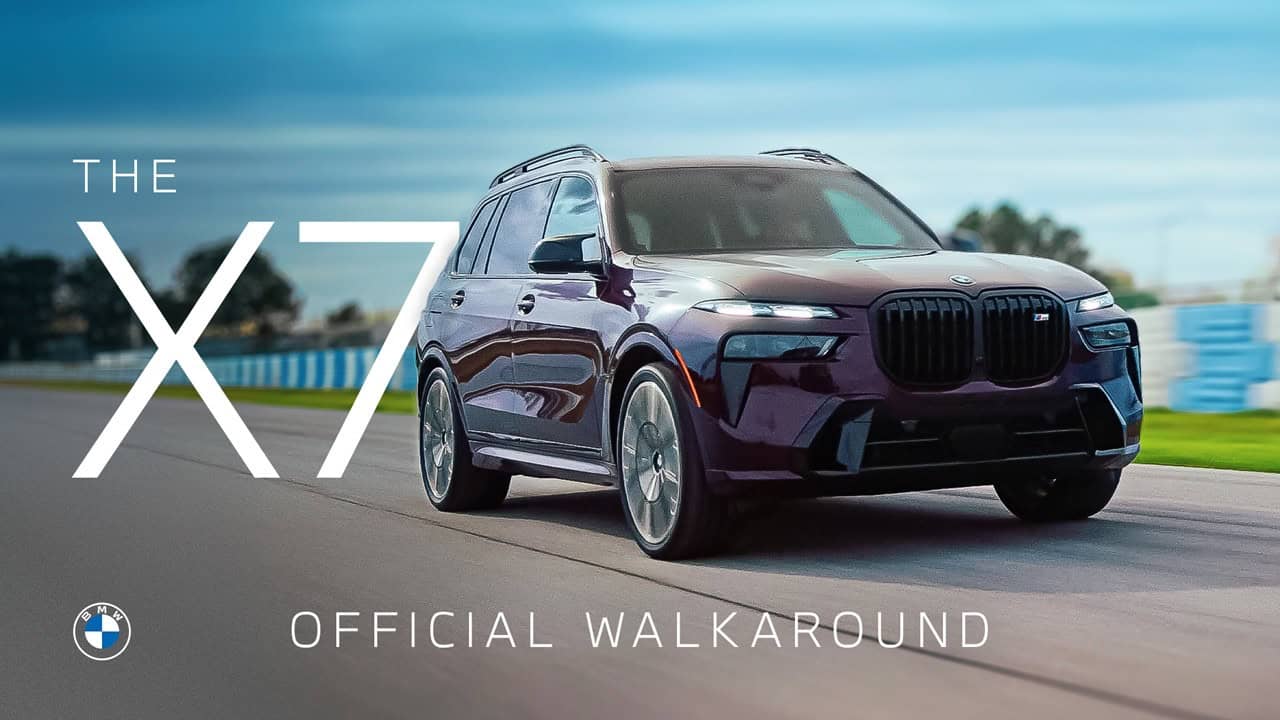
The bmw x7 is in a rare position: it is both an unapologetic statement of luxury and a functional vehicle engineered for real-world use. With the M60i iteration, BMW layers a 523-horsepower V8, advanced air suspension, and an interior that treats every occupant as a priority. This combination matters now because the premium SUV segment is evolving from mere status symbols into multidimensional platforms that must deliver comfort, technology, and dynamic capability without compromise. The bmw x7 is a clear example of how luxury automakers are responding to that demand.
How the bmw x7 changes the conversation about large luxury SUVs
At first glance the bmw x7 is a classic luxury headline: imposing presence, meticulous finishes, and expansive interior volume. Dig deeper and you find a more strategic shift. BMW has aligned three priorities that buyers can no longer accept being traded off: space, refinement, and performance. The M60i proves that you can have all three.
- Space: The x7 is BMW’s largest SUV, offering three full rows and configurable seating that can yield up to 74.86 cubic feet of cargo volume with the rear rows folded.
- Refinement: Features like soft-close doors, ambient-lit panoramic roofs, and optional crystal headlights emphasize tactile and visual quality.
- Performance: A 4.4-liter twin-turbo V8 delivers 523 hp and a 0–60 mph in about 4.5 seconds, yet BMW tunes the experience for composure as much as acceleration.
Why that balance matters: premium buyers increasingly expect vehicles to work as daily drivers, long-distance cruisers, and weekend toys. The bmw x7 is engineered to meet all three roles without betraying a single one.
Design and presence: how BMW signals luxury without excess
Design choices in the bmw x7 are about proportion and detail rather than flash alone. The split tailgate and illuminated kidney grille are modern gestures that speak to utility and theater respectively. Wheel options scale up to 23-inch five-spoke designs that anchor the silhouette while available M Sport packages inject sharper lines and aerodynamic extras for customers who want visual sportiness to match the M60i’s performance.
The cabin is intentionally layered. Materials and finishes range from high-gloss trims to tactile leathers and open-pore wood, with design intent focused on creating a “cocoon” effect that isolates passengers from road noise and distraction. The result is a large-volume interior that still feels intimate and considered — a critical requirement for long-haul comfort.
Powertrain and chassis: performance refined, not exaggerated
The headline for the bmw x7 M60i is the 4.4-liter twin-scroll V8 producing 523 hp. Those figures are striking, but BMW’s tuning philosophy here is instructive: power is delivered with a focus on linearity and body control rather than headline-grabbing brutality. That approach is why a full-size SUV can feel more composed than many sport sedans in everyday driving.
Key chassis technologies enhance the feeling of refinement and composure:
- Adaptive air suspension: Actively moderates body motion and ride height to reconcile comfort and handling.
- Rear-wheel steering: Improves low-speed maneuverability and high-speed stability, making a large SUV feel nimble in tight city environments.
- Dynamic engine mapping: Maintains composure in normal driving while offering immediate response in sport-oriented modes.
Together these systems let the bmw x7 perform like an athletic luxury car when pushed, and behave like a refined cruiser when the mood — or traffic — requires restraint. That duality is one of the model’s strongest selling points.
Interior experience: scale without compromise
The bmw x7 is built around human-scale comforts applied at a larger physical scale. Three rows are standard, but the experience matters most in the second-row configuration: optional captain’s chairs turn the cabin into a lounge for long trips; heated and ventilated seating with massage functions transform a commute into a period of genuine rest; and rear occupants have their own climate controls and charging ports.
Notably, BMW treats the third row as a true occupant space rather than a last-resort seat. It gets climate controls, charging, and even its own sunroof opening into the panoramic sky — a design choice that demonstrates BMW’s plan for the bmw x7 to be used by real families and not just weekend drivers.
Connectivity and driver assistance: modern expectations met
Running BMW’s Operating System 8.5 on a curved, floating display, the bmw x7 delivers modern infotainment that supports natural voice control, tap interactions, and smartphone integration. This is not a gimmick aisle; an intuitive interface reduces cognitive load and elevates the daily experience.
From a safety and autonomy perspective, the x7 offers an available Driver Assistance Professional package that enables hands-free driving up to 80 mph in suitable conditions. While not fully autonomous, this capability points to a near-term future where highways become semi-automated corridors and luxury vehicles provide more restful, assisted driving experiences at speed. It also raises practical questions about legislation and consumer education as partial autonomy becomes more common.
Real-world use cases: how buyers will actually use the bmw x7
The bmw x7’s engineering choices reflect several buyer archetypes simultaneously:
- Family long-distance commuter: Large cargo capacity, third-row comfort, and top-tier HVAC systems make coast-to-coast drives more livable.
- Executive shuttle: Second-row luxury options and connectivity let owners run the vehicle as a mobile office or VIP transporter.
- Weekend performance driver: The M60i’s V8 and chassis tuning deliver dynamic driving without requiring a separate sports car.
This versatility is one reason the bmw x7 performs well in a competitive luxury market where buyers prize vehicles that can handle multiple roles without forcing a choice between utility and identity.
Market context: what the bmw x7 says about luxury demand in 2025–2026
Luxury SUVs continue to dominate premium market share. Automakers are not just trying to chase exterior drama; they are optimizing vehicle platforms for multiple consumer behaviors. As reported by Reuters and other industry analysts, premium buyers increasingly look for vehicles that combine comfort, tech, and utility.
BMW’s approach with the x7 aligns with a broader trend where brand extensions blur traditional segment boundaries — a theme mirrored in coverage like the 2025 BMW X7 pickup concept discussion and other cross-segment moves. Those conversations demonstrate how manufacturers are testing new formats to capture evolving tastes among affluent buyers.
For readers tracking how legacy nameplates and product strategies adapt, see related editorial coverage such as the NewsTrendey analysis of the 2025 BMW X7 Pickup Truck Shocks the World as Luxury Meets Utility and the broader trend in vehicle revivals like 2026 Toyota Celica Supra Reborn. These items reveal that manufacturers are betting on heritage and functionality together to sustain customer interest.
Competitive analysis: where the bmw x7 sits in the premium field
The bmw x7 competes against a narrow field of large luxury SUVs that prioritize both comfort and dynamic competence. Primary competitors include flagship offerings from Mercedes-Benz, Audi, and Range Rover. What separates the bmw x7 is BMW’s emphasis on driving dynamics — rear-wheel bias, precise steering, and tunable chassis components — married to three-row practicality.
Where competitors may offer slightly different strengths — interior opulence, off-road capability, or badge prestige — the bmw x7’s synthesis of elements makes it especially attractive for buyers who want the driving character associated with BMW without sacrificing family-friendly features.
Strategic implications for BMW and the broader industry
There are four practical implications the bmw x7 signals for automakers and the luxury market:
- Premium vehicles must be multifunctional: The x7’s success will encourage rivals to avoid binary choices like “performance or comfort.”
- Technology becomes a differentiator: Advanced driver assistance and refined interfaces are now expected in the segment.
- Platform flexibility matters: If BMW pursues derivative models — including experimental pickups or electrified offshoots — the x7’s architecture demonstrates how brands can amortize investments across distinct vehicle types.
- Regulatory and infrastructure impacts: Semi-autonomous features and increasingly complex electrified powertrains require harmonized regulation and consumer education, especially as hands-free driving up to 80 mph becomes more common.
Those strategic shifts are already evident in adjacent stories and product concepts. For instance, readers tracking next-generation off-road/luxury hybrids may find the Toyota Imperial Cruiser MAX 2026 a useful comparative reference point when evaluating how premium brands configure capability and luxury together.
Why the bmw x7 M60i matters to buyers and industry observers
For buyers, the bmw x7 offers a rare combination: true third-row usability, genuine V8 performance, and modern convenience tech. For the industry, it proves that large, luxurious vehicles need not be either-or propositions. They can be both expressive and practical.
This is not just product positioning. It is a statement about buyer psychology: premium consumers want fewer trade-offs and more all-around competence. The bmw x7 delivers a commercially viable response to that expectation.
Comparative signals: culture, technology, and sport
Automotive products do not exist in a vacuum. Cultural touchpoints and adjacent industries often mirror the same strategic moves. The return of legacy nameplates and cross-segment experimentation is a broader pattern you can spot across NewsTrendey coverage: from the speculative revival of the Chevy Impala Impala to the excitement around the 2026 Toyota Stout Pickup. These are examples of brands mining heritage while retooling for modern needs.
Technology trends matter too. As 5G networks evolve and in-vehicle connectivity becomes a key differentiator, insights from coverage of 5g in 2026 illustrate why manufacturers factor network capability into real-time services like navigation, over-the-air updates, and advanced driver assistance coordination. The bmw x7’s OS 8.5 and connected systems are designed to leverage those advances.
Even sports parallels are useful. Strategic flexibility — whether in roster construction or vehicle packaging — wins over single-purpose specialization. A good contemporary parallel is the analysis of the Timberwolves vs Warriors — December 12, 2025 recap, where adaptability and balanced contributions trumped overreliance on singular stars. The bmw x7 applies that same principle to vehicle design: balanced strengths beat a single flashy stat.
Near-term outlook: where the bmw x7 could lead the market
Expect to see several downstream effects as the bmw x7 reaches wider audiences:
- More configurable interiors: Manufacturers will expand second-row comfort options because consumers now expect passenger-centric features.
- Greater focus on usable third rows: Competing brands will likely enhance third-row ergonomics and amenities rather than treating them as afterthoughts.
- Integration of partial autonomy: With hands-free driving abilities up to highway speeds, buyers will weigh driver assistance as a regular safety and convenience feature rather than a luxury add-on.
- Electrified derivatives: As emissions regulations tighten and electrification becomes cost-effective, expect plug-in hybrid and full-electric versions of flagship SUVs to appear.
All these trajectories amplify why the bmw x7 is more than a single product — it is a platform for what premium SUVs must become.
What to watch next: evidence-based signals
Watch for these concrete indicators to gauge the bmw x7’s market impact:
- Trim-level uptake data: which buyers choose M60i performance trims versus more comfort-oriented configurations.
- Adoption of driver assistance features: rates of opt-in for hands-free highway driving packages and associated safety outcomes.
- Residual values and lease penetration: early resale performance will indicate long-term brand strength in the segment.
- Derivative concepts: any official moves toward pickup or coupe-like extensions of the x7 platform will reveal BMW’s strategic appetite for cross-segment products.
For context on derivative concepts already discussed in industry outlets, review the analysis of the 2025 BMW X7 Pickup Truck Shocks the World as Luxury Meets Utility and how those explorations shape consumer expectations.
Bottom line: a large SUV that behaves like a luxury machine
The bmw x7 M60i is a commercial argument as much as a product statement. It proves that size and luxury can coexist with a driver-focused identity. Whether for executives, families, or enthusiasts who refuse to compromise, the bmw x7 offers a convincing case that the next generation of premium SUVs will be judged by how well they integrate comfort, technology, and dynamic capability — not by any single attribute alone.
“Luxury and practicality aren’t opposites. They’re better together.”
Further reading and related reporting
Industry and cultural coverage that helps place the bmw x7 in context include NewsTrendey reports on vehicles and market trends such as Chevy Impala Impala Returns? 2026 SS Rumors, Price and Release Timeline, 2026 Toyota Stout Pickup Returns. Design, Features, Engine, Mileage, and Expected Price, and 2026 Toyota Celica Supra Reborn. Toyota Revives a Legendary Nameplate for a New Performance Era. For broader mobility and lifestyle perspective, see the feature on Toyota Imperial Cruiser MAX 2026 – Next-Gen Off-Road Beast, Adventure-Ready & Feature-Packed! and the retrospective on cultural figures like Raul Malo Dies at 60: The Mavericks Frontman’s Legacy and Impact.
For a forward-looking technical comparison related to networks and in-vehicle services, the discussion in 5g in 2026: AT&T vs T‑Mobile vs Verizon — Coverage, Speed, and Which to Choose is useful. And for a sports-minded analogy about balanced teams and adaptability, review the Timberwolves vs Warriors — December 12, 2025 Game Recap & Analysis.
Finally, for industry context on how major outlets cover vehicle strategies and market data, note summaries and trend reporting as reported by Reuters and wider analyses cited in mainstream outlets. For sports-technology parallels, consider assessments such as those in ESPN’s Week 16 game analysis for how strategic flexibility affects outcomes.
Frequently Asked Questions About the BMW X Series
How much does a BMW X cost?
BMW X models start from entry-level pricing with the X1 and scale upward. The BMW X7 M60i sits at the top of the range with premium pricing reflective of its features and performance.
What is a BMW X?
BMW X refers to BMW’s SUV lineup, combining sport-focused engineering with utility-oriented design.
What is the price of BMW X2 in USA?
The BMW X2 is priced lower than mid-size X models, targeting compact luxury buyers.
What is the price of BMW X1 M?
BMW does not offer an official X1 M variant. M Performance trims are available instead.
Which BMW X is a 7 seater?
The BMW X7 is the only BMW X model offering standard three-row seating.
What’s better, Audi Q7 or BMW X5?
Audi Q7 emphasizes comfort and technology. BMW X5 focuses on driving dynamics. Choice depends on priorities.
Which is better, X1 or X3?
X1 suits urban driving and efficiency. X3 offers more space and performance.
Is there a BMW X9?
There is currently no official BMW X9 model.
Is BMW xDrive better?
BMW xDrive provides predictive all-wheel drive traction and enhances stability in varying conditions.
Is X2 or X3 bigger?
The BMW X3 is significantly larger than the X2 in both interior space and cargo capacity.